Land reclamation standard is the foundation of the Land Function approach to measuring whether disturbed land has truly regained stable environmental performance. This page explains how the Land Function Framework evaluates terrain stability, hydrologic function, and soil-vegetation response using observable, repeatable field and reporting methods.
Why a land reclamation standard matters
A land reclamation standard should do more than describe reclamation activities. It should measure whether the land performs properly after disturbance. The Land Function approach focuses on real land behavior, not surface appearance alone. That means slopes must remain stable, runoff must behave properly, soils must hold, and vegetation must persist through time.
Many reclamation programs rely on checklists, short-term visual improvements, or isolated treatment milestones. A stronger land reclamation standard evaluates whether all major landscape processes work together as a functioning system. This is why the Land Function Framework emphasizes measurable land behavior across seasons and over time.
How this land reclamation standard is applied
The Land Function Framework applies a land reclamation standard through repeatable evaluation of three core components: terrain integrity, hydrologic behavior, and soil-vegetation response. These components provide a practical basis for field observation, monitoring, reporting, and certification.
- Terrain integrity confirms whether reclaimed slopes, landforms, and drainage paths remain stable.
- Hydrologic function evaluates runoff pathways, infiltration opportunity, drainage connectivity, ponding, and erosion behavior.
- Soil and vegetation response measures whether surface development and plant establishment show long-term recovery.
Land reclamation standard documents and guidance
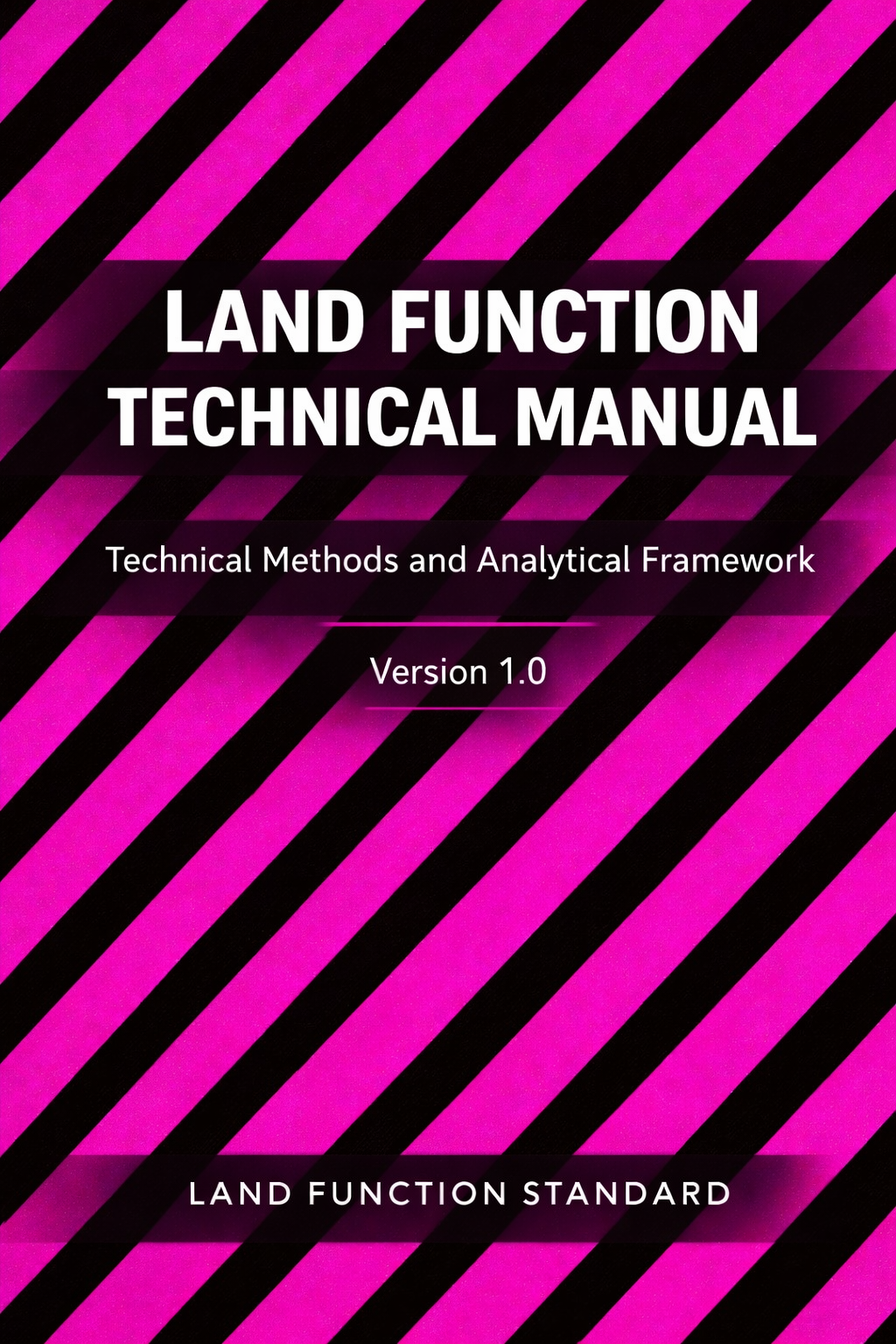
This land reclamation standard is supported by a complete technical document set that includes methodology, standard operating procedures, field guidance, monitoring and verification protocols, reporting structure, and certification guidance. Together, these documents help operators, consultants, and regulators apply the method consistently.
Start with the Land Function library to review the full document collection. You can also review the courses page for training resources and visit the contact page to request additional information about implementation, reporting, or certification.
Land reclamation standard image reference

The image above shows the primary methodology document used to support the land reclamation standard within the Land Function Framework. Including this document image helps identify the methodology visually and reinforces the technical structure behind the standard.
Why regulators and operators need a land reclamation standard
Regulators, mine operators, consultants, and land stewards need a land reclamation standard that is clear, measurable, and defensible. A useful standard should allow different reviewers to assess the same site and reach similar conclusions when conditions are the same. That is what makes a method repeatable and professionally defensible.
The Land Function Framework is designed to support consistent reclamation decisions, field verification, performance reporting, and long-term review. By focusing on terrain, water, soil, and vegetation as connected processes, this land reclamation standard helps distinguish true recovery from temporary visual improvement.
External reclamation references for land reclamation standard work
Professionals applying a land reclamation standard often review broader reclamation and land management guidance. Useful public references include the U.S. Environmental Protection Agency, the Bureau of Land Management, and the Office of Surface Mining Reclamation and Enforcement. These references help place land performance review in a broader reclamation context.
Using the land reclamation standard for measurable outcomes
A land reclamation standard should always answer one question: does the land function? In the Land Function Framework, that answer comes from measurable outcomes. Stable slopes, functional runoff, retained soils, and persistent vegetation are signs that reclamation performance is real. When those conditions are missing, the land has not yet regained function.
This page supports the Land Function Framework by defining the role of the land reclamation standard in modern reclamation evaluation. Use the documents on this page to review the methodology, understand the procedures, apply the field guidance, verify performance, document results, and support certification decisions.