THE STANDARD

A Repeatable Standard for Land Reclamation

Reclamation is not complete when disturbance is hidden. It is complete when land function is restored and repeatable performance can be demonstrated through measurable terrain stability, hydrologic behavior, and soil-vegetation response across time.

WHY THIS STANDARD EXISTS

The land must perform, not just appear reclaimed.

The Land Function Standard establishes a repeatable framework for evaluating reclamation success using observable land behavior and measurable environmental metrics. It is built on the principle that real reclamation is demonstrated through persistent performance, not paperwork, surface appearance, or isolated treatment milestones.

This standard provides a structured method for assessing whether disturbed land has regained the ability to support stable terrain, route and store water appropriately, recover soil function, and sustain vegetation response over time without ongoing corrective intervention. It is designed to be applied consistently by operators, consultants, inspectors, regulators, and land stewards who need a technically defensible basis for reclamation decisions.

THE METRIC FRAMEWORK

Repeatability begins with observable, measurable performance.

Terrain Integrity

Reclaimed land must demonstrate stable form. Slopes, drainage paths, surface roughness, and landform continuity are evaluated to determine whether the terrain can persist without excessive erosion, collapse, ponding, gullying, or repeated rework.

Hydrologic Function

Water must move through the site in a functional way. The standard evaluates runoff behavior, infiltration opportunity, channel development, drainage connectivity, and signs of concentration or stagnation that indicate continued land dysfunction.

Soil and Vegetation Response

Land recovery must be visible in surface condition and ecological response. Soil retention, surface development, vegetative establishment, seasonal persistence, and resistance to renewed disturbance provide evidence that the reclaimed land is functioning as a living system.

STANDARD PRINCIPLES

A valid reclamation standard must be repeatable across people, places, and time.

Observable

The standard relies on visible land behavior, field indicators, mapped conditions, and documented environmental response rather than unsupported assumptions.

Measurable

Reclamation must be tied to definable metrics that can be assessed consistently through terrain, hydrology, and ecological response.

Repeatable

Different evaluators using the same method should reach substantially similar conclusions when observing the same site conditions.

Defensible

The method must support professional reporting, compliance documentation, and technical explanation of how the land behaves and why those behaviors matter.

Seasonally Persistent

Performance must continue through changing weather and seasonal cycles, not only during short windows of temporary stability.

Outcome-Based

The focus is whether the land functions, not whether a checklist item was completed in isolation.

CORE DOCUMENTS

The Complete Land Function Standard Framework

These six documents work together to define the methodology, establish standard operating procedures, guide field application, document verification, support reporting, and provide a certification path for repeatable land reclamation evaluation.


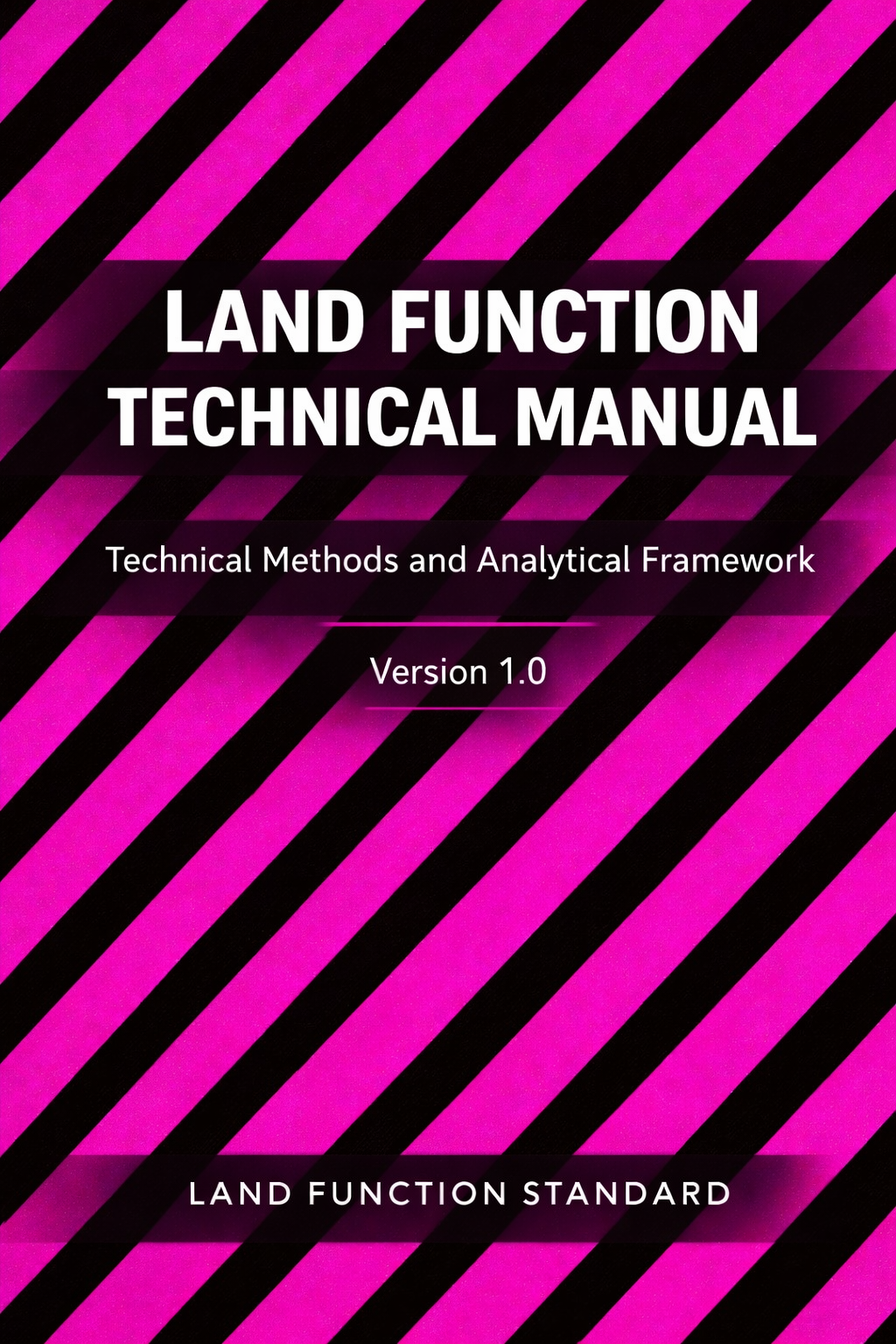
Land Function Standard methodology cover document
Methodology

Land Function Standard Methodology

Establishes the conceptual and technical foundation of the standard, including the performance logic, metric framework, and cause-and-effect basis for evaluating reclaimed land.


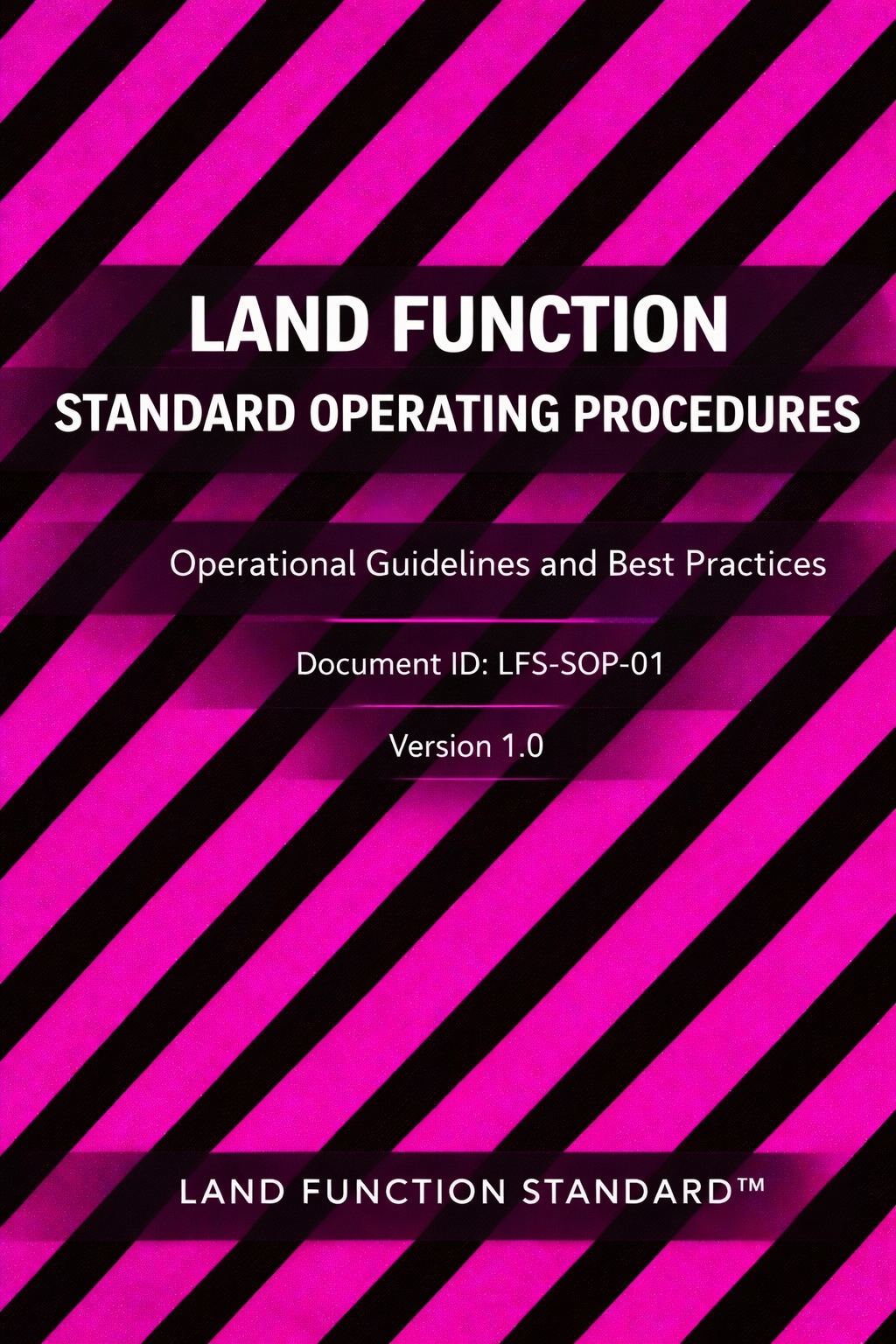
Land Function Standard Operating Procedures cover document
SOP

Land Function Standard SOP

Defines the standard operating procedures for applying the method consistently, documenting observations, evaluating site conditions, and producing repeatable reclamation assessments.


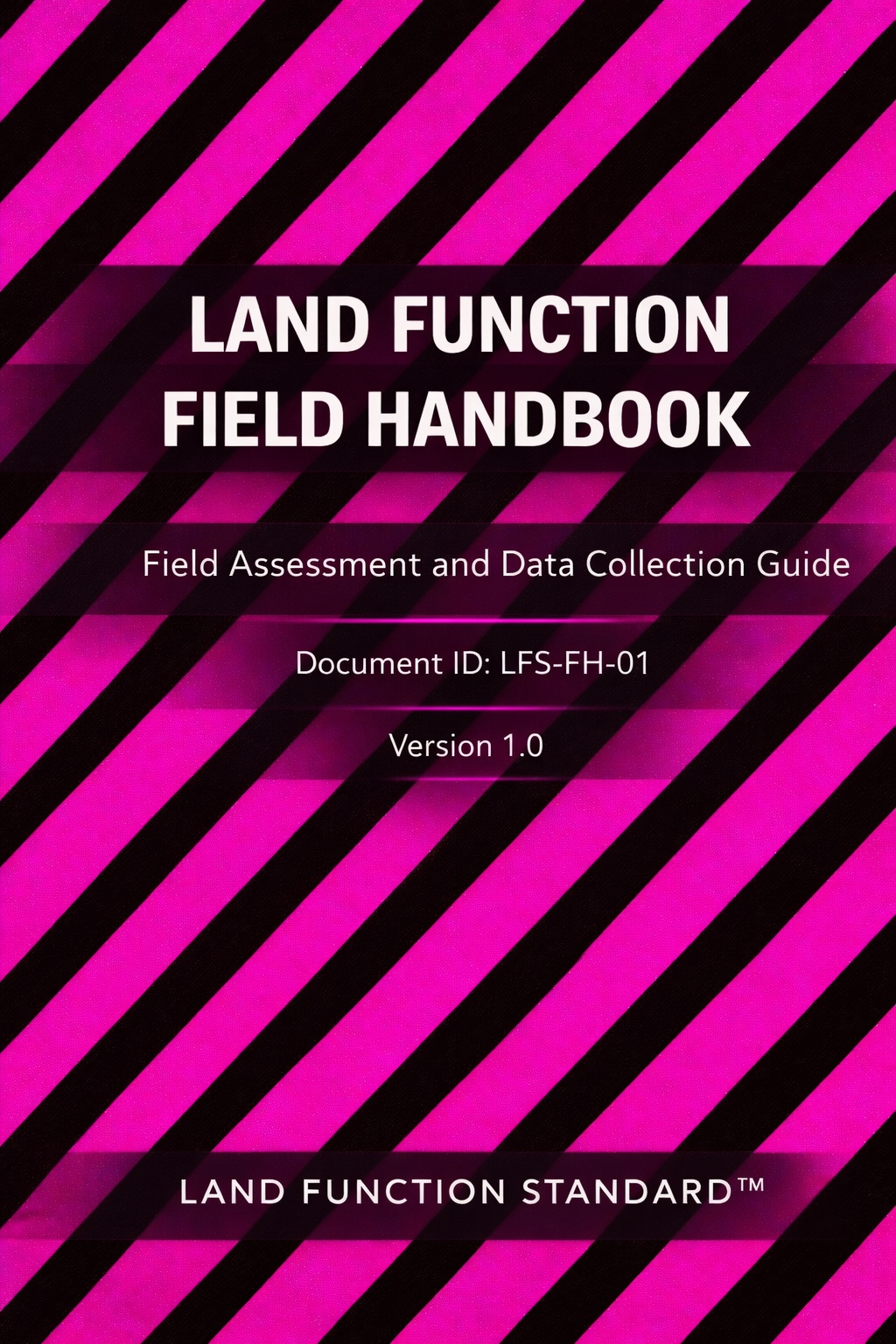
Land Function Standard Field Handbook cover document
Field Guide

Land Function Standard Field Handbook

Translates the standard into practical field application with direct observation guidance for terrain, water behavior, soil condition, and vegetation response in disturbed and reclaimed landscapes.


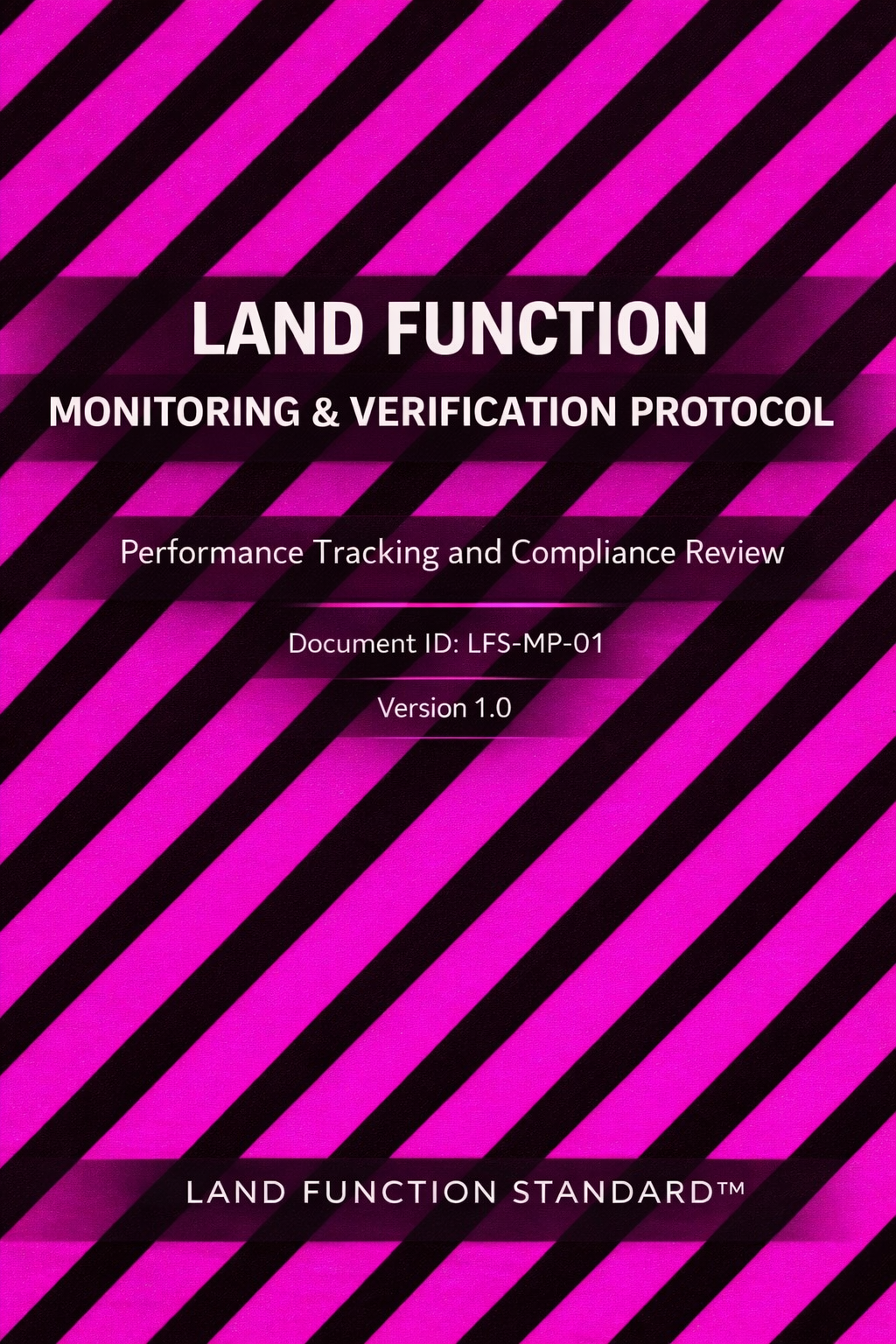
Land Function Monitoring and Verification Protocol cover document
Monitoring

Monitoring & Verification Protocol

Defines the procedures used to monitor reclaimed landscapes and verify whether terrain, hydrology, soil condition, and vegetation response demonstrate stable land function.


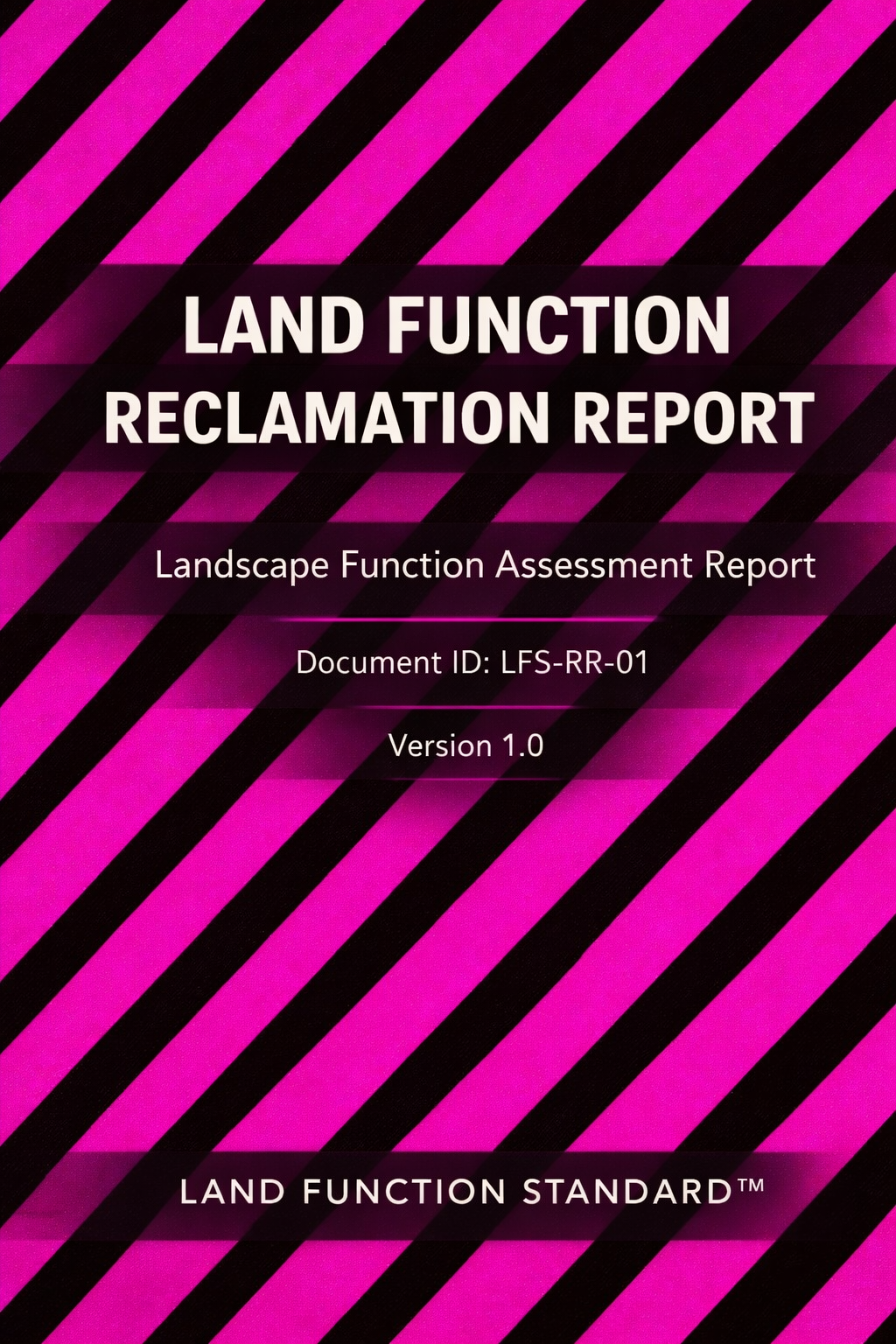
Land Function Reclamation Report cover document
Assessment

Land Function Reclamation Report

Demonstrates how reclaimed landscapes are evaluated and documented using the Land Function Standard to determine whether environmental processes have been restored.


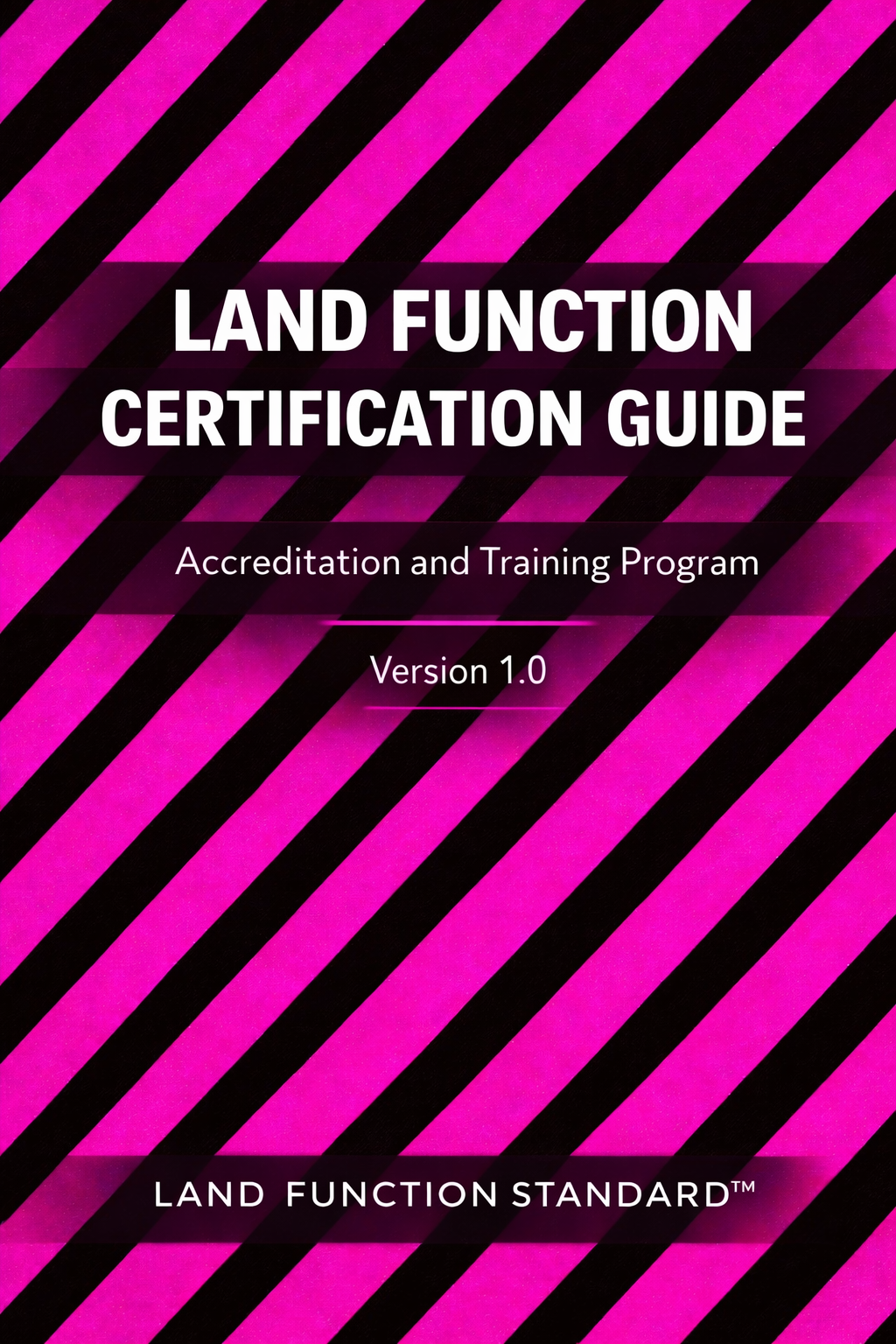
Land Function Certification Guide cover document
Certification

Land Function Certification Guide

Describes the certification framework used to confirm that reclaimed land has achieved stable terrain, functional hydrology, and sustained soil-vegetation response.

HOW THE STANDARD IS USED

A consistent process for evaluating reclaimed land

01

Define the disturbance context

Identify the type, extent, and physical consequences of mining disturbance so the reclamation assessment is grounded in actual land change.

02

Assess terrain and drainage condition

Evaluate landform continuity, slope stability, runoff pathways, erosion evidence, ponding behavior, and overall terrain performance relative to functional recovery.

03

Evaluate soil and vegetation response

Determine whether the site shows recovery in surface retention, soil development, plant establishment, and seasonal resilience.

04

Document cause and effect

Connect observed conditions to the processes that created them so the assessment explains both what the land is doing and why it is behaving that way.

05

Determine functional outcome

Conclude whether the site demonstrates stable and repeatable land function or whether additional corrective work is still required.

Land reclamation standard is the foundation of the Land Function approach to measuring whether disturbed land has truly regained stable environmental performance. This page explains how the Land Function Framework evaluates terrain stability, hydrologic function, and soil-vegetation response using observable, repeatable field and reporting methods.

Why a land reclamation standard matters

A land reclamation standard should do more than describe reclamation activities. It should measure whether the land performs properly after disturbance. The Land Function approach focuses on real land behavior, not surface appearance alone. That means slopes must remain stable, runoff must behave properly, soils must hold, and vegetation must persist through time.

Many reclamation programs rely on checklists, short-term visual improvements, or isolated treatment milestones. A stronger land reclamation standard evaluates whether all major landscape processes work together as a functioning system. This is why the Land Function Framework emphasizes measurable land behavior across seasons and over time.

How this land reclamation standard is applied

The Land Function Framework applies a land reclamation standard through repeatable evaluation of three core components: terrain integrity, hydrologic behavior, and soil-vegetation response. These components provide a practical basis for field observation, monitoring, reporting, and certification.

  • Terrain integrity confirms whether reclaimed slopes, landforms, and drainage paths remain stable.
  • Hydrologic function evaluates runoff pathways, infiltration opportunity, drainage connectivity, ponding, and erosion behavior.
  • Soil and vegetation response measures whether surface development and plant establishment show long-term recovery.

Land reclamation standard documents and guidance

This land reclamation standard is supported by a complete technical document set that includes methodology, standard operating procedures, field guidance, monitoring and verification protocols, reporting structure, and certification guidance. Together, these documents help operators, consultants, and regulators apply the method consistently.

Start with the Land Function library to review the full document collection. You can also review the courses page for training resources and visit the contact page to request additional information about implementation, reporting, or certification.

Land reclamation standard image reference

land reclamation standard methodology cover

The image above shows the primary methodology document used to support the land reclamation standard within the Land Function Framework. Including this document image helps identify the methodology visually and reinforces the technical structure behind the standard.

Why regulators and operators need a land reclamation standard

Regulators, mine operators, consultants, and land stewards need a land reclamation standard that is clear, measurable, and defensible. A useful standard should allow different reviewers to assess the same site and reach similar conclusions when conditions are the same. That is what makes a method repeatable and professionally defensible.

The Land Function Framework is designed to support consistent reclamation decisions, field verification, performance reporting, and long-term review. By focusing on terrain, water, soil, and vegetation as connected processes, this land reclamation standard helps distinguish true recovery from temporary visual improvement.

External reclamation references for land reclamation standard work

Professionals applying a land reclamation standard often review broader reclamation and land management guidance. Useful public references include the U.S. Environmental Protection Agency, the Bureau of Land Management, and the Office of Surface Mining Reclamation and Enforcement. These references help place land performance review in a broader reclamation context.

Using the land reclamation standard for measurable outcomes

A land reclamation standard should always answer one question: does the land function? In the Land Function Framework, that answer comes from measurable outcomes. Stable slopes, functional runoff, retained soils, and persistent vegetation are signs that reclamation performance is real. When those conditions are missing, the land has not yet regained function.

This page supports the Land Function Framework by defining the role of the land reclamation standard in modern reclamation evaluation. Use the documents on this page to review the methodology, understand the procedures, apply the field guidance, verify performance, document results, and support certification decisions.
APPLY THE STANDARD

Use a repeatable method to evaluate real reclamation performance.

The Land Function Standard gives operators, consultants, and regulators a measurable way to assess whether disturbed land has truly regained function. Review the documents, apply the method, and evaluate the land through repeatable metrics that hold across time and observation.